
Why People Say "SEO Is Meaningless": Causes of Failure and the Right Approach
June 15, 2026
Author: Shusaku Yosa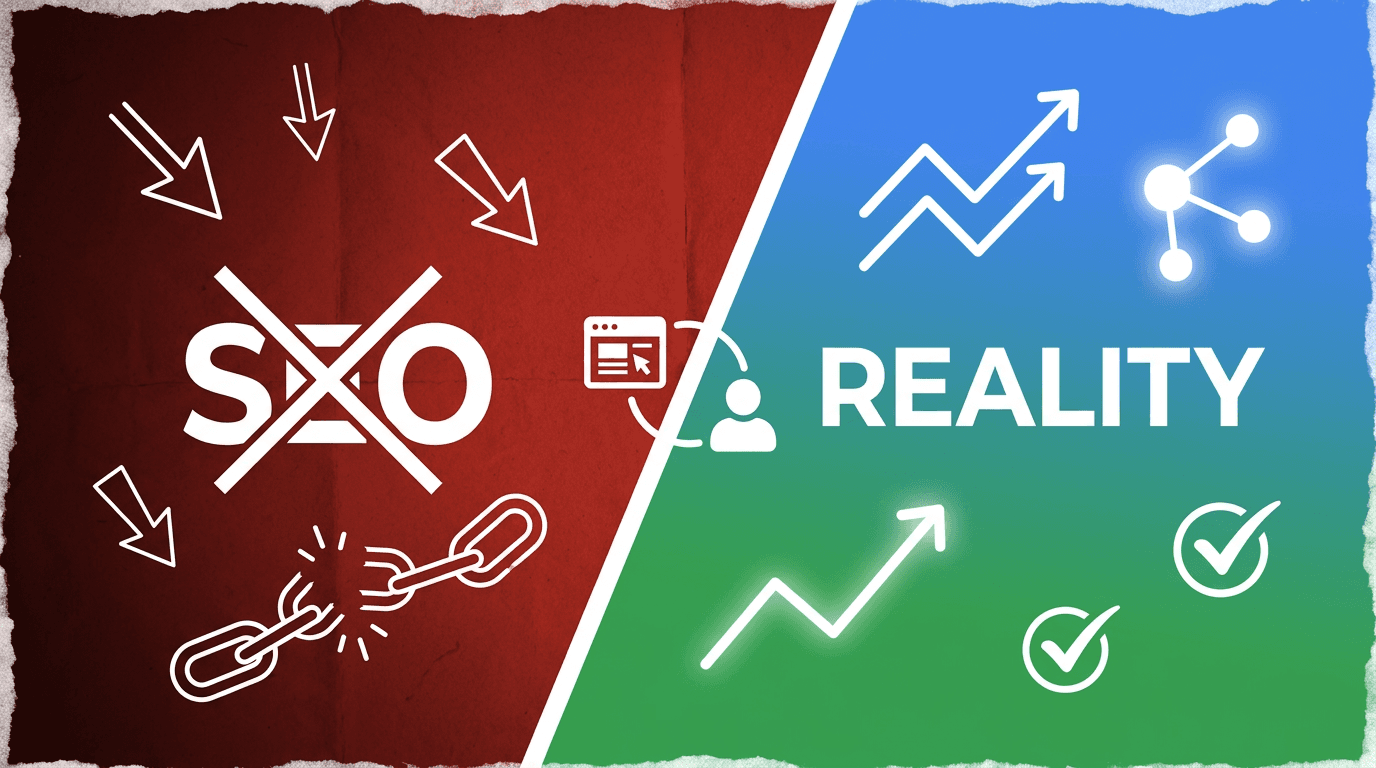
Have you heard people say "SEO is meaningless" and started wondering whether it's worth doing at all? It's true that there are plenty of cases where, despite the effort, results don't come and people end up feeling that "SEO is meaningless." In most of these cases, however, the cause lies in how SEO is being approached. This article organizes the reasons people say "SEO is meaningless," and explains why results fail to appear along with the right way to proceed.
Four Reasons People Say "SEO Is Meaningless"
1. Because It Takes Time to See Results
It is common for SEO to take several months before results appear. Publishing content does not immediately lead to top rankings; it takes time for crawling, indexing, and the accumulation of evaluation. If you give up in the short term without understanding this timeline, you tend to arrive at the conclusion that "SEO is meaningless."
2. Because Search Intent and Content Are Misaligned
Even if you pack keywords into an article, you cannot expect top rankings if it is misaligned with the information searchers want (search intent). In many cases of "I added the keywords but my rankings won't rise," the cause is a mismatch with search intent.
3. Because You Are Targeting Keywords That Are Too Competitive
Big keywords with high search volume are dominated by major and long-established sites, and it is not easy for a newly launched site to break in. Targeting only keywords you have no chance of winning leaves your effort unrewarded and makes you feel that "SEO is meaningless."
4. Because You Are Not Measuring and Improving
If you keep running tactics without grasping the current situation through access analytics and Search Console, you won't know what is working and what is not. If you cannot turn the improvement cycle, results are left to chance, which leads to the assessment that "SEO is meaningless."
Why SEO Still Has Meaning
On the other hand, SEO done properly still has great value today. Traffic from search is an asset-type channel that, unlike advertising, lets you attract customers continuously without ongoing cost. Content that has once ranked highly delivers stable traffic over the medium to long term. It is important not to be swayed by the phrase "SEO is meaningless" and to see its true essence.
The Right Way to Proceed to Get Results
First, start with keywords you can realistically rank highly for, matched to your site's scale and domain evaluation. It is effective to build a track record with low-competition long-tail keywords. On top of that, carefully read the search intent and create high-quality content that solves the user's problem.
Then, publishing is not the end: check search queries and rankings in Search Console, and rewrite pages whose rankings struggle to rise. This repetition of measurement and improvement is the only way out of the state of feeling "SEO is meaningless." An attitude of working with a medium-to-long-term perspective, on the premise that results take time, is essential.
Summary
Behind the claim that "SEO is meaningless" lie causes such as the time it takes to see results, misalignment with search intent, mistakes in keyword selection, and a lack of an improvement cycle. Conversely, if you understand these correctly and proceed accordingly, SEO is still a fully meaningful measure today. Without chasing short-term results too eagerly, keep repeating measurement and improvement steadily, with solving the user's problem at the core.