Dōsen Explained: Planned Navigation vs. Actual User Paths
May 31, 2026
Author: Shusaku Yosa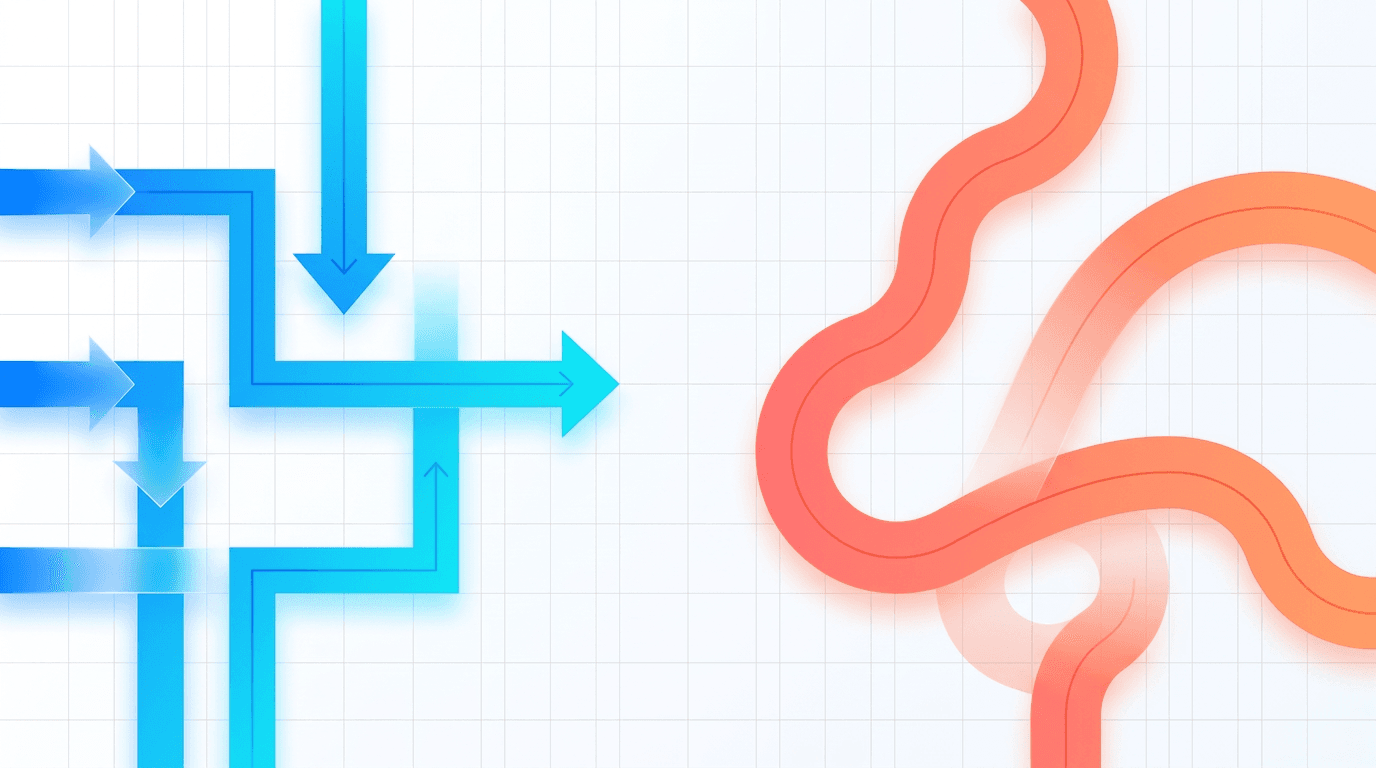
The Japanese words 導線 and 動線 are both pronounced dōsen. In website marketing and retail planning, a useful distinction is that 導線 describes a route designed to guide people toward a goal, while 動線 describes the paths people take.
For example, linking an article to a pricing page and then an inquiry form creates a planned route. A visitor who instead moves from the article to your company profile follows an actual user path. Understanding the difference helps you discuss both the design and the evidence behind website improvements.
What is the difference between 導線 and 動線?
Aspect | 導線: designed guidance | 動線: movement path |
|---|---|---|
Pronunciation | Dōsen | Dōsen |
Meaning in marketing | A route prepared to guide someone toward a goal | The route someone follows through a space or website |
Primary perspective | The designer's intention | The user's movement |
Website example | A link sequence from an article to a download form | A visitor opening an article, case study and pricing page |
Typical expressions | Design or create a navigation route | Observe or analyze a movement path |
Context matters. 導線 also means an electrical conductor or wire. 動線 is widely used in architecture and retail to discuss how people move through a space.
The distinction is not an absolute rule that one word always describes a plan and the other always describes a result. Architects can plan 動線 before anyone uses a building—for example, a convenient route between a kitchen and laundry room. The planned-versus-observed distinction is especially useful as a working model for website improvement.
Examples of how the two words are used
Examples of 導線
- Design a route so readers can explore a service related to the article.
- Add signage that guides exhibition visitors to a consultation area.
- Improve the route from a product explanation to the ordering page.
Use this concept when you mean the guidance provided through signs, links or other interface elements. A specific description such as “design the route to an inquiry” is clearer than simply saying “improve the flow.”
Examples of 動線
- Observe store traffic and discover that few customers reach the rear display.
- Analyze visitor paths and find repeated movement between pricing and case studies.
- Shorten the route used for household tasks between rooms.
This concept focuses on movement, distance and usability. Instead of saying a path is “bad,” describe the behavior: users repeatedly return to the same page while looking for a condition or price.
Compare your planned route with actual website behavior
A business trying to generate inquiries might plan the following route:
Planned navigation: Search → Educational article → Related service → Case studies or pricing → Inquiry
Example observed path: Search → Educational article → Company profile → Back to the article → Exit
This is an illustrative example, not an actual analytics finding. The difference does not prove that the company-profile link is a problem. Visitors may want to verify who provides the service before considering it. Check which information is missing and whether your service page answers that question clearly.
Not everyone needs to follow the same sequence. Some people are ready to inquire; others need pricing or evidence first. Effective navigation gives each group a clear way to find the information it needs.
Five steps for designing useful website navigation
1. Define the goal and entry point
Decide what the page should help a visitor do: understand a term, compare options, register or request information. Then consider whether the person arrived through search, social media or an advertisement, and what they likely know already. Someone seeking a definition usually needs an answer before a sales pitch.
2. List the information needed before the next action
Identify questions about price, eligibility, setup, conditions and examples. Creating more pages is not the objective. If a question can be answered clearly on the current page, answer it there rather than forcing another click.
3. Make link destinations clear
Labels such as “Compare pricing plans” and “Read the setup steps” help people predict what happens next. A vague “Click here” gives less information. Place relevant links where the reader needs them and avoid overwhelming every section with competing actions.
4. Test on a smartphone
Check spacing, sticky elements, form input and back navigation—not just text size. A page can look polished while a horizontal pricing table or unclear validation message makes it difficult to use.
5. Review behavior after publication
Check whether people reach the intended pages and whether they repeatedly move back and forth. Record the change date and baseline, then test one adjustment to wording, placement or supporting information.
How to inspect user paths in GA4
GA4's Path exploration helps you examine the pages and events that occur before or after a selected point. Start from an article to investigate the next steps, or work backward from a completion event to explore what preceded it.
- Open the correct property and go to Explore → Path exploration.
- Set the period you want to investigate.
- For forward analysis, choose the article through a page title or page-path node as the starting point.
- For backward analysis, use a separate exploration starting from an ending page or event.
- Compare relevant conditions, such as mobile versus desktop.
You cannot specify both a starting point and an ending point in the same path exploration. Paths can also span multiple sessions, so a displayed sequence does not necessarily represent one visit. See the official GA4 Path exploration guide.
Pageviews alone may not show whether a particular button was clicked. Our guide to GA4 click events in GTM explains how to define and test those interactions.
Interpret the evidence before making changes
Observation | Possible hypothesis | Next check |
|---|---|---|
An article is read, but its link is rarely clicked. | The destination is unclear or not relevant to the reader's next need. | Relevance, link label and placement |
Visitors return from the pricing page. | They need to compare conditions or understand plan differences. | Comparison table, FAQ and price explanation |
People open the form but few finish it. | Input effort, errors or unsuitable requirements create friction. | Form fields, error messages and completion tracking |
An exit is not automatically a failure. Someone may read a definition, get the answer they need and leave satisfied. Evaluate behavior against the purpose of the page and the visitor's likely needs.
Separating designed guidance from actual movement makes improvement discussions more concrete. Start with one important article: identify where it should help readers go next, then compare that intention with the paths you can observe.
Official analytics information reviewed: September 22, 2026.