
Media Strategy posts

Read the full article for detailed insights.
Shusaku Yosa

SWOT Analysis Examples: 10 Industry Templates & Writing Samples
For executives, business leaders, marketing managers, strategic planners, and new business managers searching for SWOT analysis examples. Covers 10 industry-specific SWOT analysis examples (B2B SaaS / Restaurants / E-commerce / Mid-sized Manufacturing / Recruiting / Real Estate / Medical Clinics / Tutoring Schools / Toyota real example / Personal Career), Cross SWOT writing samples (SO/ST/WO/WT strategy templates and entry examples), 3 tips for improving writing (numbers and proper nouns, competitor and customer perspectives, quantitative data backing), 3 considerations when creating industry examples (overwriting with company specifics, time horizon clarification, combining with other frameworks), and next steps for strategy formulation (Cross SWOT to action plans, KPI design and review cycles, MMM/attribution analysis connection). A complete guide with practical examples and templates directly applicable to your own SWOT creation.
Shusaku Yosa

How to Do SWOT Analysis | 5 Steps and Examples Complete Guide
A practical, end-to-end how-to for SWOT analysis aimed at executives, business leaders, marketing leads, and corporate strategy professionals searching for "how to do SWOT analysis." Covers the overall flow and required preparation (structure refresher, three preparation items, time required from a one-day workshop to living operation), the five practical steps in detail (Step 1: decide purpose, scope, and participants / Step 2: map the external environment with PEST, Five Forces, and primary/secondary sources / Step 3: map the internal environment with 3C, value chain, and VRIO / Step 4: organize the four quadrants on an impact x feasibility matrix and set priorities / Step 5: translate findings into strategy via cross-SWOT (SO, ST, WO, WT writing templates) and convert into KPI-driven action plans), industry examples using a fictional mid-sized BtoB SaaS company, writing templates (four-quadrant format, BtoB SaaS / e-commerce / restaurant filled examples, three quality tips), common operational issues and remedies (items not surfacing, discussions not converging, updates not continuing), and applications to marketing and performance measurement (GA4, Search Console, MMM, and attribution analysis). A complete, ready-to-use guide that takes you all the way from learning the procedure to running SWOT in your own organization.
Shusaku Yosa

What is SWOT Analysis? A Complete Guide to the Framework's Basics and 4 Elements
A comprehensive guide to SWOT analysis for executives, business owners, marketing leads, and corporate strategy professionals searching for "swot analysis," "swot," or "what is swot analysis." Covers the definition and history (Stanford Research Institute, Harvard Business School origins), how SWOT differs from 3C, PEST, and Five Forces, the meaning and examples of each of the four elements (Strengths, Weaknesses, Opportunities, Threats), the importance of separating internal and external factors, the five-step procedure (clarify purpose and scope, map external environment, map internal environment, prioritize, translate into strategy and action plans), cross-SWOT analysis (the TOWS matrix and how to derive SO/ST/WO/WT strategies), common use cases (corporate strategy, new business and product planning, marketing and brand design, personal career strategy), benefits and limitations, common mistakes and operational fixes (granularity, internal/external confusion, stopping at analysis, stale documents), and applications to marketing and digital strategy via the 4P/4C framework, data-driven SWOT, and integration with marketing mix modeling (MMM) and attribution analysis. A practical, ready-to-use guide for strategic planning.
Shusaku Yosa

What Is robots.txt? A Guide to Syntax, Setup, and SEO Impact
A complete guide for web managers, SEO specialists, and engineers searching "robot.txt" or "robots.txt": fundamental concepts (definition and role, what it can and cannot do, how it differs from meta robots/sitemap.xml), basic syntax (User-agent, Disallow, Allow, Sitemap, Crawl-delay), setup (root placement, UTF-8, 500 KiB limit, WordPress/Next.js/headless CMS implementations), use-case examples (allow all, block admin, block search/parameter URLs, image/PDF control, AI crawler selective blocking), SEO impact (crawl budget optimization, misconfiguration risks, not a noindex substitute), 2026 AI crawler response (GPTBot/ClaudeBot/Google-Extended selective permissions, llms.txt complement), validation/testing methods (Search Console robots.txt report, browser direct check, simulation tools), and five common mistakes (staging config to production, CSS/JS blocking, noindex misuse, pattern matching misunderstanding, Sitemap relative paths) with fixes.
Shusaku Yosa
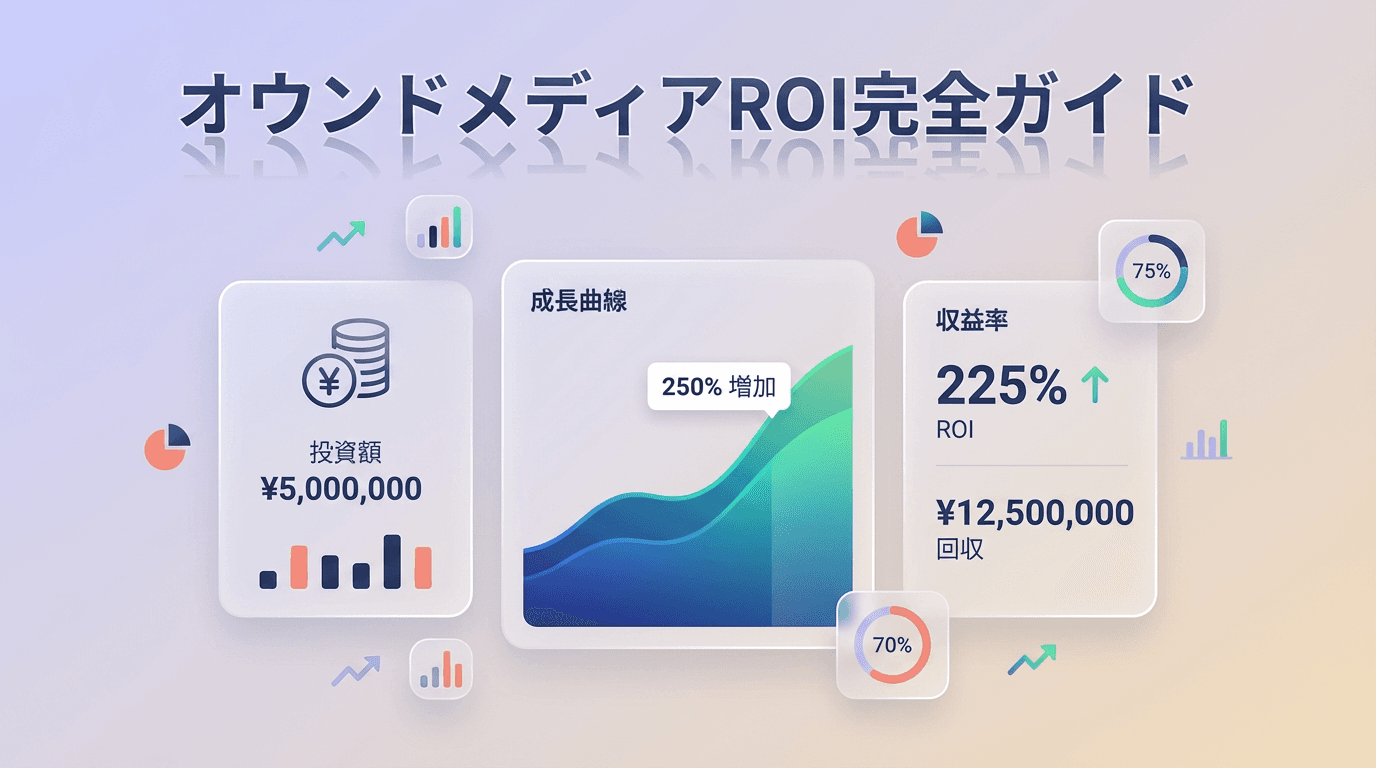
Owned Media ROI: How to Calculate It and Drive Cost Effectiveness
A complete guide for executives, marketing leaders, and owned media managers searching "owned media ROI" or "owned media cost effectiveness": the basic definition (ROI vs. ROAS, why measurement is hard), the full cost picture (initial costs, operating costs, tools, hidden salary costs), the outcomes generated (direct/indirect/stock-type asset value), practical ROI calculation methods (base formula, monthly/cumulative tracking, expanded ROI including indirect impact, BtoB SaaS 3-year cumulative ROI example exceeding 1,000%), three causes of stagnation (missing KGI/KPI design, mass-produced low-quality content, no measurement/PDCA) and fixes, five tactics to maximize cost effectiveness (business-goal themes, stock-asset design, AI+human workflow, rewrite optimization, MMM visualization), and new 2026 lenses for the AI search era (zero-click impression value, GEO/LLMO, MMM under cookie restrictions).
Shusaku Yosa
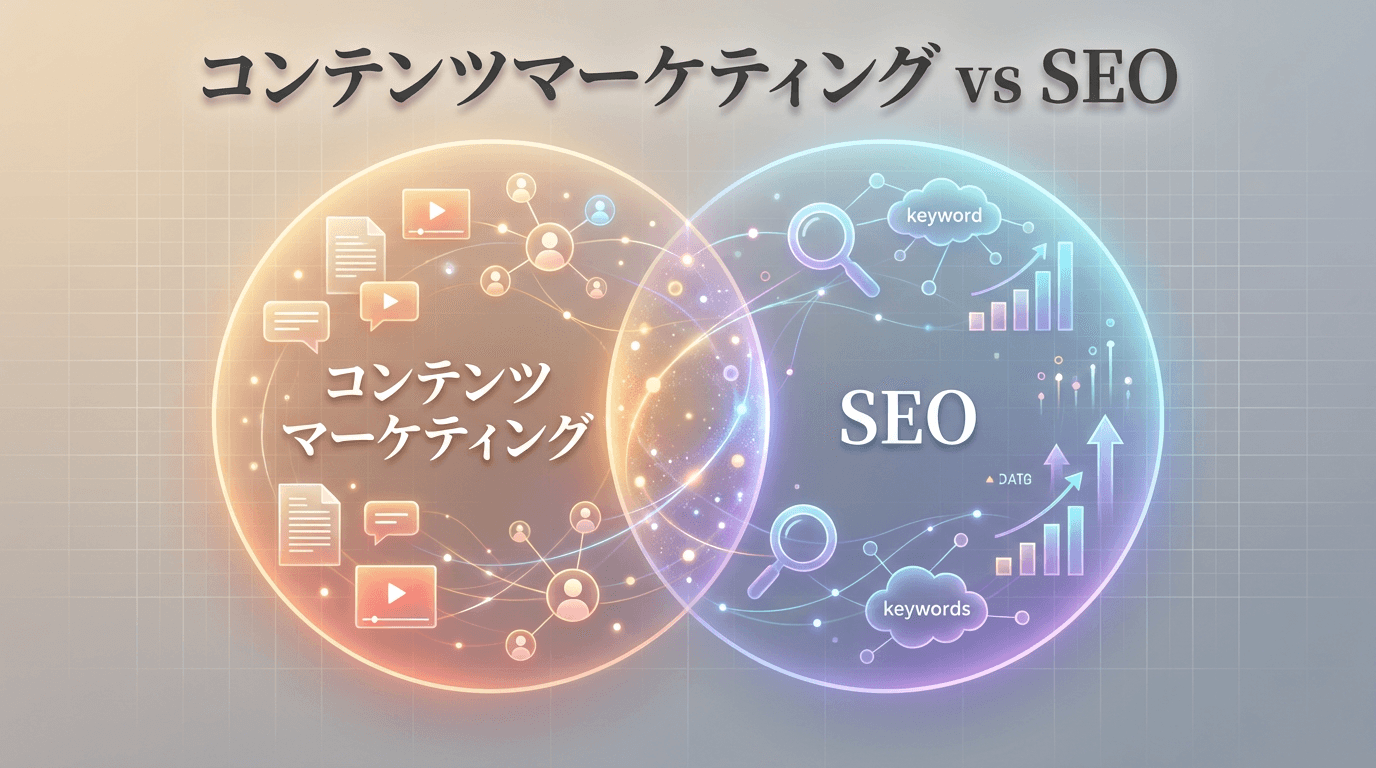
Content Marketing vs. SEO: How to Build a Strategy That Leverages Both
A complete guide for executives and marketing leaders on "content marketing seo": the differences (goals, scope, time horizon, primary KPIs), the overlap (content SEO) and independent territories, why combining both is essential in 2026 (AI Overviews, zero-click search, cookie regulations, rising ad costs), a 6-step framework for building an integrated strategy (business goals & KGI/KPIs, persona & customer journey, channel roles, content map & keywords, production workflow, measurement & PDCA), three common pitfalls (SEO bias, content bias, channel silos), and KPI design across awareness/consideration/conversion stages plus MMM for holistic contribution analysis.
Shusaku Yosa

What Are the Benefits of SEO? Timeline, Measurement Methods, and How to Improve Results
A complete 2026 guide to SEO benefits and performance measurement: what SEO benefits actually are (quantitative and qualitative, and how SEO differs from paid media as a stock-type asset), the 5 core benefits (organic traffic growth, CPA reduction, brand awareness and branded search, 24/7 sales asset, and E-E-A-T authority), how long SEO takes to work per Google's official guidance (4 months to 1 year), timelines by domain state (new sites 6-12 months, established sites 3-6 months, YMYL 1+ year), phase-by-phase progression, how to measure SEO with awareness/interest/conversion phase KPIs and Google Search Console / Google Analytics 4 / rank trackers, new 2026 measurement lenses (zero-click impression value, AI Overviews traffic separation, MMM under Cookie regulations), the 5 root causes when SEO isn't working (intent misalignment, E-E-A-T gaps, technical SEO, content freshness, core updates) and their fixes, data-driven rewrite prioritization, and cross-channel analysis with an integrated dashboard. Everything you need to understand SEO benefits correctly and translate them into results.
Shusaku Yosa

What Is Content SEO? A Complete Strategy Guide to Ranking Articles in 2026
A complete 2026 guide to content SEO: the core definition of content SEO (and how it differs from technical SEO and content marketing), why it matters more in the AI search era (AI Overviews, AI Mode, GEO, E-E-A-T), the pros and cons, a 5-step strategic planning framework (goals, personas, keyword research, competitive analysis, topic clusters, editorial workflow), a 7-step process for writing SEO articles that rank (search intent, outline design, title and meta optimization, body writing with PREP, E-E-A-T boosters, internal and external linking, structured data and Core Web Vitals), the latest 2026 trends (GEO, query fan-out, Experience, zero-click brand awareness), KPI design and measurement, rewrite and refresh timing, and the 5 most common content SEO mistakes and how to avoid them. Useful whether you're just starting with content SEO or have been publishing without results.
Shusaku Yosa
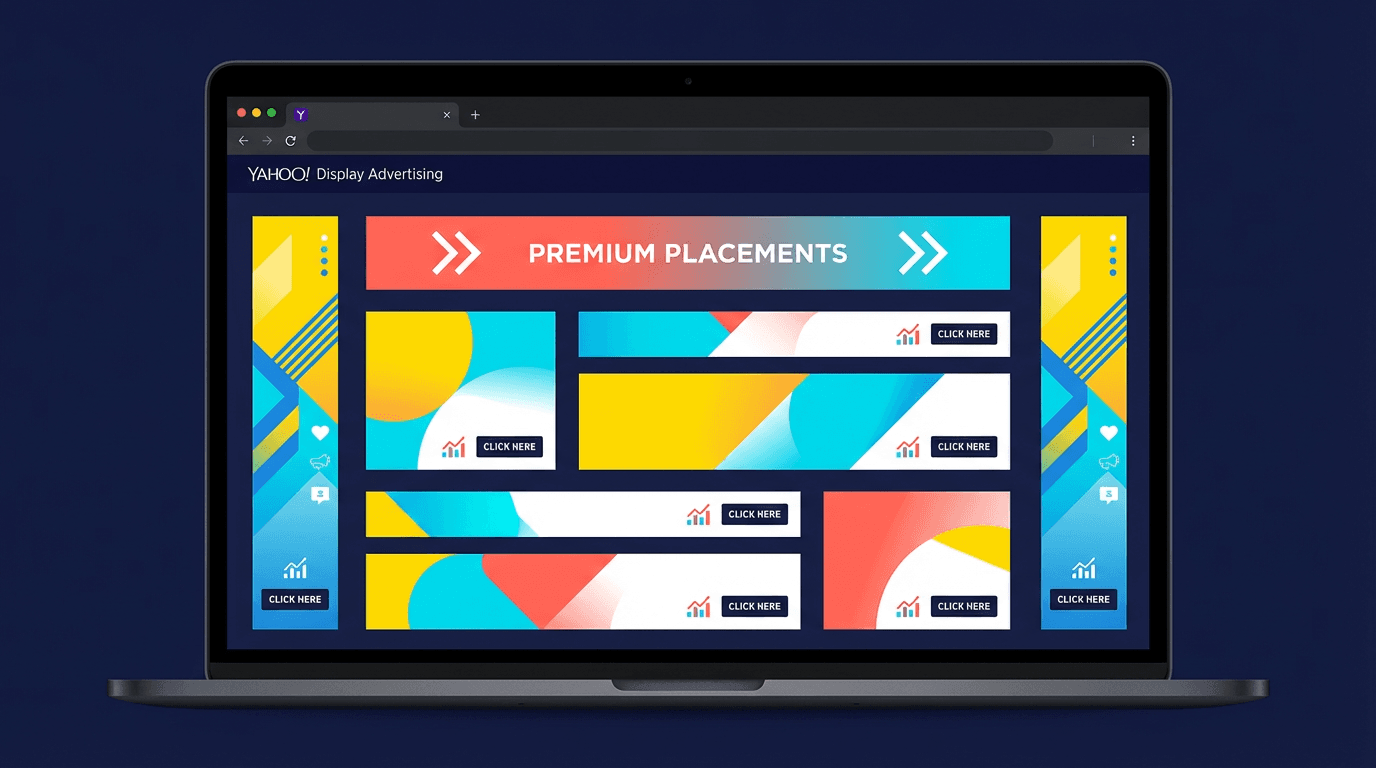
What Is YDN (Yahoo! Display Ads)? Setup Guide and Operational Best Practices
A complete 2026 guide to YDN (Yahoo! Display Ad Network): fundamentals, the 6 key changes from the 2021 migration to YDA (Yahoo! Display Ads), main ad placements and differences from GDN, core targeting options (Audience Categories, Search Targeting, Site Retargeting), an 8-step setup guide, 7 operational best practices, cookie-era considerations, and cross-media measurement with MMM.
Shusaku Yosa

Types of B2B Advertising and Success Stories: Choosing Channels That Drive Leads
A 2026 deep dive on B2B advertising: fundamentals (5 differences vs B2C), 9 main channel categories (paid search / display / Meta / LinkedIn / X / video / sponsored articles / newsletter / lead gen media / B2B-focused DSP / ABM), a 4-axis framework for selecting channels (audience stage / objective / budget / product), 5 keys to successful lead generation (ICP / funnel / LP / nurturing / SLA), 3 success story patterns (SaaS x review media, manufacturer x tie-up, enterprise x ABM), cookie-era cautions, and cross-media measurement with MMM.
Shusaku Yosa
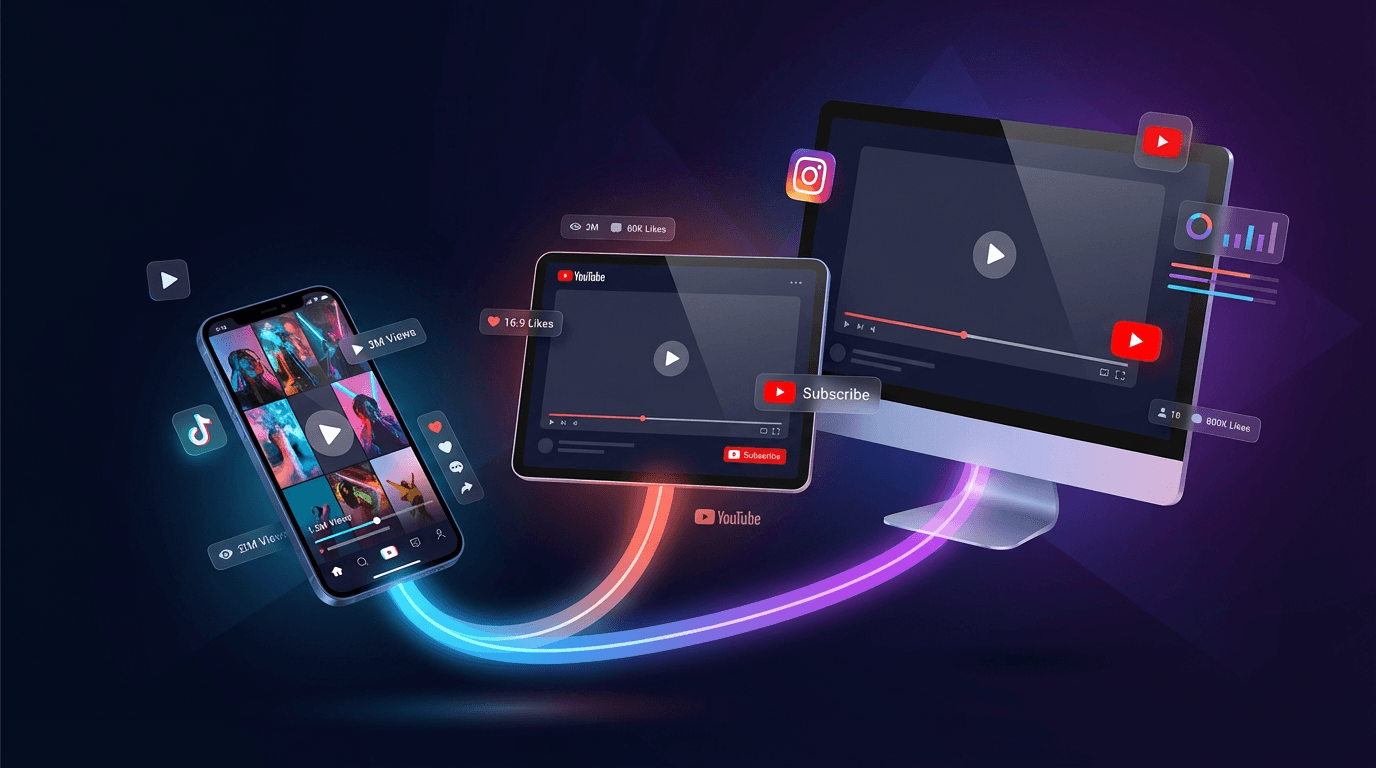
Types and Costs of Video Advertising: YouTube vs. SNS Features and Measurement
A complete 2026 guide to video advertising: in-stream vs. out-stream formats, CPM/CPV/CPC/CPCV pricing, platform-specific features and costs for YouTube, Instagram/Facebook, TikTok, X, and LINE, 8 measurement KPIs, cookie-era cautions, 4 creative design principles, and MMM-based cross-media evaluation.
Shusaku Yosa